Mesh metal vs solid link watch bands: which is more stable on the wrist
Comparing Mesh and Solid Link Metal Bands in Daily Wear
A watch that slides around on your wrist each time you reach for your phone or type at a keyboard can quickly become an annoyance. Stability—the way a band holds a watch steady against your wrist—varies noticeably between different types of metal bands, particularly mesh and solid link designs. Understanding how these two styles interact with your wrist during daily activities helps in choosing the right option for reliable wear.
How Mesh and Solid Link Bands Are Constructed
Both mesh and solid link bands are typically made from stainless steel, valued for its strength and resistance to corrosion. However, their construction methods lead to distinct differences in flexibility, weight distribution, and wrist contact.
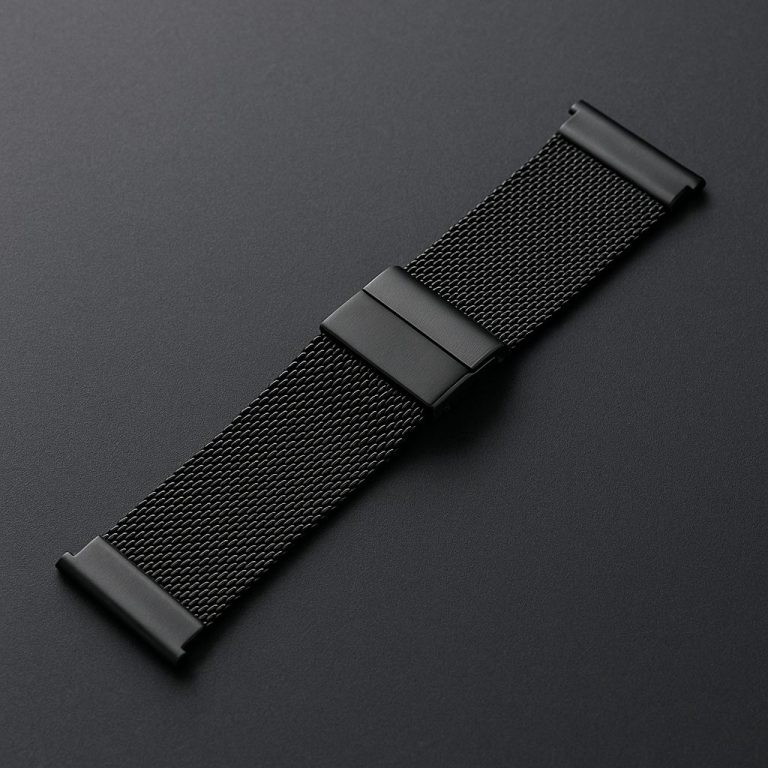
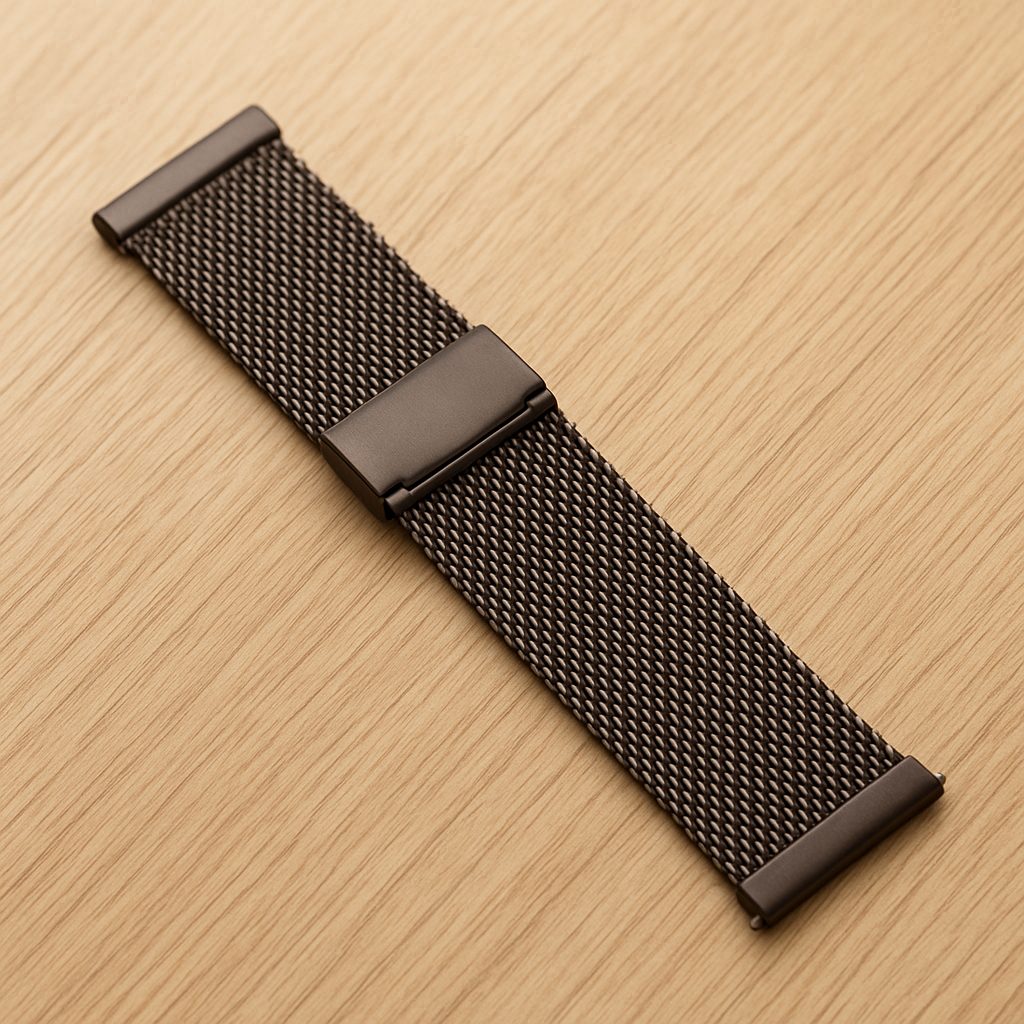
- Mesh bands are woven from fine strands of metal, creating a flexible, fabric-like sheet that can contour closely to the wrist.
- Solid link bands are assembled from individual rigid links, joined by pins or screws, forming a segmented bracelet with less overall flexibility.
These structural differences play a direct role in how securely each type of band holds the watch in place during movement.
Factors Affecting Stability on the Wrist
Stability depends on how evenly the band distributes pressure around the wrist, how well it conforms to wrist shape, and how effectively it prevents the watch case from rotating or sliding. The clasp type and the ability to adjust the band’s length also influence stability.
Mesh Bands: Flexibility and Fit
Mesh bands conform closely to the wrist, thanks to their fine, woven construction. This flexibility allows the band to make more consistent contact along the entire circumference of the wrist, reducing gaps where the watch could shift. Mesh bands often feature sliding or adjustable clasps, allowing for precise size adjustments. This makes it easier to find a snug, secure fit that minimizes movement.
However, the very flexibility that allows mesh bands to contour so well can occasionally result in the band stretching slightly with repeated use, especially if the mesh is finely woven or made from thinner strands. This can gradually introduce some play, causing the watch to move more than it did initially. High-quality mesh bands with reinforced edges or thicker weave densities tend to hold their shape better over time.
Solid Link Bands: Rigidity and Weight
Solid link bands are more rigid, providing a stable “bracelet” structure. This rigidity helps to anchor the watch case in position, especially when the band is properly sized to the wearer’s wrist. Solid links distribute the watch’s weight more evenly but can create small gaps at the underside of the wrist, particularly if the wrist is not a perfect match for the band’s standard link increments.
Adjusting the size of a solid link band requires adding or removing entire links, which means the fit may not always be as precise as with a mesh band. If the band is even slightly loose, the watch may slide or rotate more than with a mesh band. On the other hand, a well-sized solid link band can feel very stable and secure, with the added benefit of resisting stretching over time.
Quick Comparison Table: Mesh vs Solid Link Stability
| Feature | Mesh Metal Band | Solid Link Metal Band |
|---|---|---|
| Wrist Contour | Highly flexible, conforms closely | Rigid, less adaptable to wrist shape |
| Fit Adjustment | Usually finely adjustable | Adjusted by adding/removing links (less precise) |
| Potential for Stretch | Possible over time (especially with fine mesh) | Very minimal; maintains shape |
| Stability When Properly Fitted | Very stable, little movement | Very stable, little movement |
| Stability When Slightly Loose | May shift slightly, but conforms to wrist | More prone to sliding or rotating |
| Weight Distribution | Lighter, even across wrist | Heavier, balanced by link segments |
Clasp and Adjustment Mechanisms
The clasp mechanism has a direct impact on stability. Mesh bands commonly use sliding clasps or fold-over clasps that allow micro-adjustments, letting the user dial in a near-perfect fit. Because the mesh itself is so flexible, this adjustment makes a significant difference in how securely the watch sits.
Solid link bands use deployant, butterfly, or fold-over clasps. While some offer micro-adjustment holes or extension systems, the basic fit still depends on having the right number of links. For those whose wrist size falls between link increments, the watch might be slightly too loose or too tight, impacting stability during movement.
For both types, a properly adjusted clasp—combined with a well-fitted band—greatly reduces watch movement during activities such as walking, typing, or exercising.
Other Considerations for Wrist Stability
Some users find that mesh bands, being lighter and more flexible, are less likely to cause the watch case to “roll” or rotate on the wrist, especially during activities involving frequent wrist flexing. This is because the mesh can adapt more easily to changes in wrist shape and tension. Solid link bands, while secure, may feel heavier and can sometimes shift if the bracelet is not precisely sized, particularly with larger or heavier watch cases.
During day-to-day tasks like using a computer mouse or carrying objects, a solid link band may press into the wrist more noticeably at specific contact points, simply due to its segmented structure. Mesh bands distribute pressure more evenly, which can help keep the watch in place without creating pressure spots.
When Stability Matters Most
For activities that involve quick wrist movements—such as cycling, working with tools, or sports—a stable watch band prevents distraction and reduces the risk of the watch case banging against objects. In these cases, a mesh band with a properly adjusted sliding clasp often provides a close, secure fit, while a solid link band requires careful sizing and may benefit from micro-adjustment features at the clasp.
For more formal occasions or settings where the watch is not subject to sudden movement, both band types can be equally stable when properly fitted. The choice then comes down to personal preference for feel, weight, and appearance.
Practical Tips for Achieving a Stable Fit
Regardless of the band type, the most stable fit comes from careful adjustment:
- With mesh bands, use the clasp’s micro-adjustment feature to find the tightest comfortable setting.
- With solid link bands, remove or add links for a snug fit and use any available fine-tuning holes on the clasp.
- Check the band periodically, especially if the mesh starts to stretch or if the solid links develop play at the pins.
If your wrist size changes due to temperature or activity (for example, swelling during exercise), mesh bands often accommodate these changes more smoothly than rigid link bands.
Choosing the Right Metal Band for Stability
Mesh metal bands generally offer more consistent wrist contact and easier fine-tuning, making them particularly stable for wrists that fall between standard link sizes or experience subtle size fluctuations. Solid link bands provide excellent stability if precisely sized, but their rigidity and reliance on discrete link increments can sometimes make a perfect fit harder to achieve. For those prioritizing wrist stability in everyday use, the choice often comes down to which adjustment style best matches their wrist shape and activity level.